

 By
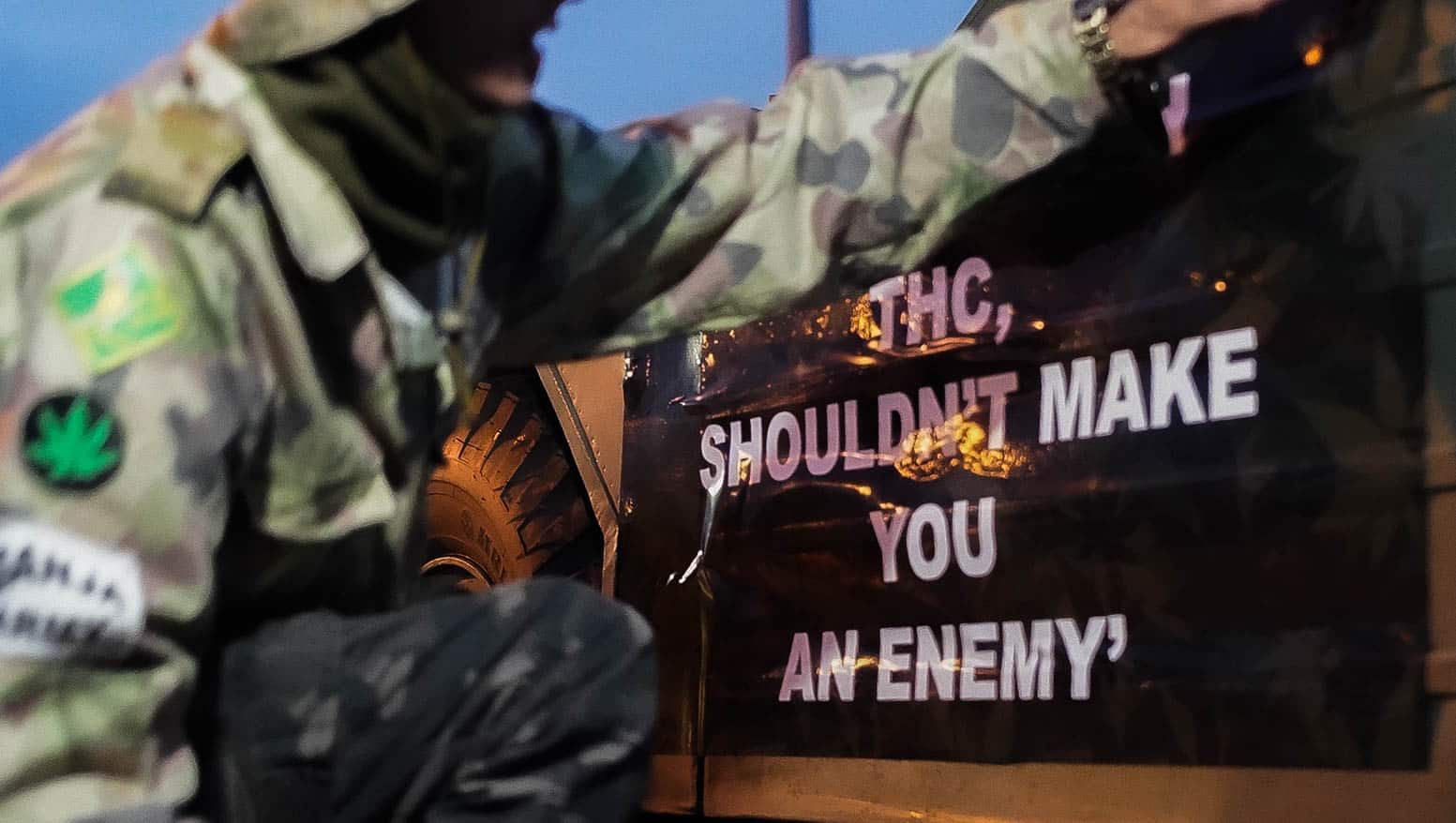
By A group of Australian cannabis activists took to the streets of Sydney in a convoy of military vehicles to protest the failed drug war and policies that penalize drivers found with THC in their systems. Collectively known as “Who Are We Hurting?” The military and activist groups staged protests on April 20, a public holiday for the global cannabis community. A squadron of military vehicles, including tanks, drove past two famous landmarks in the Australian city, the Sydney Opera House and the Sydney Harbor Bridge, providing the backdrop for protests on April 20, 2022. It features an image of cannabis projected onto the iconic bridge. Structure.
Organizers of last year's April 20 protests, Alec Zammit and Will Stork, have been criminally charged under a law that bans the projection of commercial images at the Sydney Opera House. The pair are on bail pending charges in what they claim is a constitutionally protected protest against Australia's cannabis ban.

In this year's demonstrations, a group of activists secured a fleet of armored military vehicles and traveled across Sydney to bring facts about cannabis directly to Australian news outlets. The protest also aims to highlight the failure of Australia's New South Wales state's cannabis policy, which imposes penalties on drivers found to have THC in their system. Under the law, drivers found to have THC in their system are subject to criminal penalties, including license suspension or revocation, hefty fines, and jail time. Zammit said the military action was designed to highlight the harmful policies of the failed drug war.
“This visual statement aims to highlight the need for a new approach to drug driving policy, one that prioritizes mitigation and treatment over punishment and incarceration,” Zammit said in a statement to the press. There is,” he said.
Activists say a 2019 study by the University of Sydney's Lambert Initiative, a research program investigating the medical potential of cannabis, found that drivers under the influence of high-potency THC products were more likely to swerve out of their lane, while others pointed out that measurements showed that intoxicated drivers were somewhat safer. . Drunk drivers tended to “leave a large distance between themselves and the car in front of them,'' and they tended to “not drive too fast.'' According to research.
“Driving with THC should not make you an enemy,” Zammit added. “We need to change driving laws. Cannabis patients deserve equal coverage.”
The protests will also educate the public about the benefits of cannabis legalization, including enhanced personal freedoms and the potential for new sources of revenue for public services by regulating and taxing the production and sale of commercial cannabis. The purpose is

“We want to publicize the debate around cannabis in Australia and ask the government who is hurt by amnesty,” said fellow cannabis activist Mr Stork. “We also want to educate Australian taxpayers about the benefits of fully legalizing cannabis in Australia. Huge sums of money will flow into Australian government coffers.
“We also want to highlight the fact that over 75 years of the war on drugs has been ineffective and is costing taxpayers billions of dollars in a war that can never be won.” continued Mr. Stoke.
Australia's cannabis policy reform movement recently received new momentum with the Cannabis Legalization NSW Party's election of Jeremy Buckingham as its first MP. Mr Buckingham, a former Green Party member, said he would spend much of his time advocating for the legalization of cannabis and related policy reforms.
“I am honored to be elected as the inaugural member of the NSW Cannabis Legalization Party,” he said. stated in a statement. “I am dedicated to advancing the cause of drug law reform and working towards a more just and equitable society. I look forward to working with my colleagues in Congress and the broader community to make this vision a reality.” looking forward to it.”
