
 By
This week brought a mix of operational guidance and market milestones for the cannabis industry.
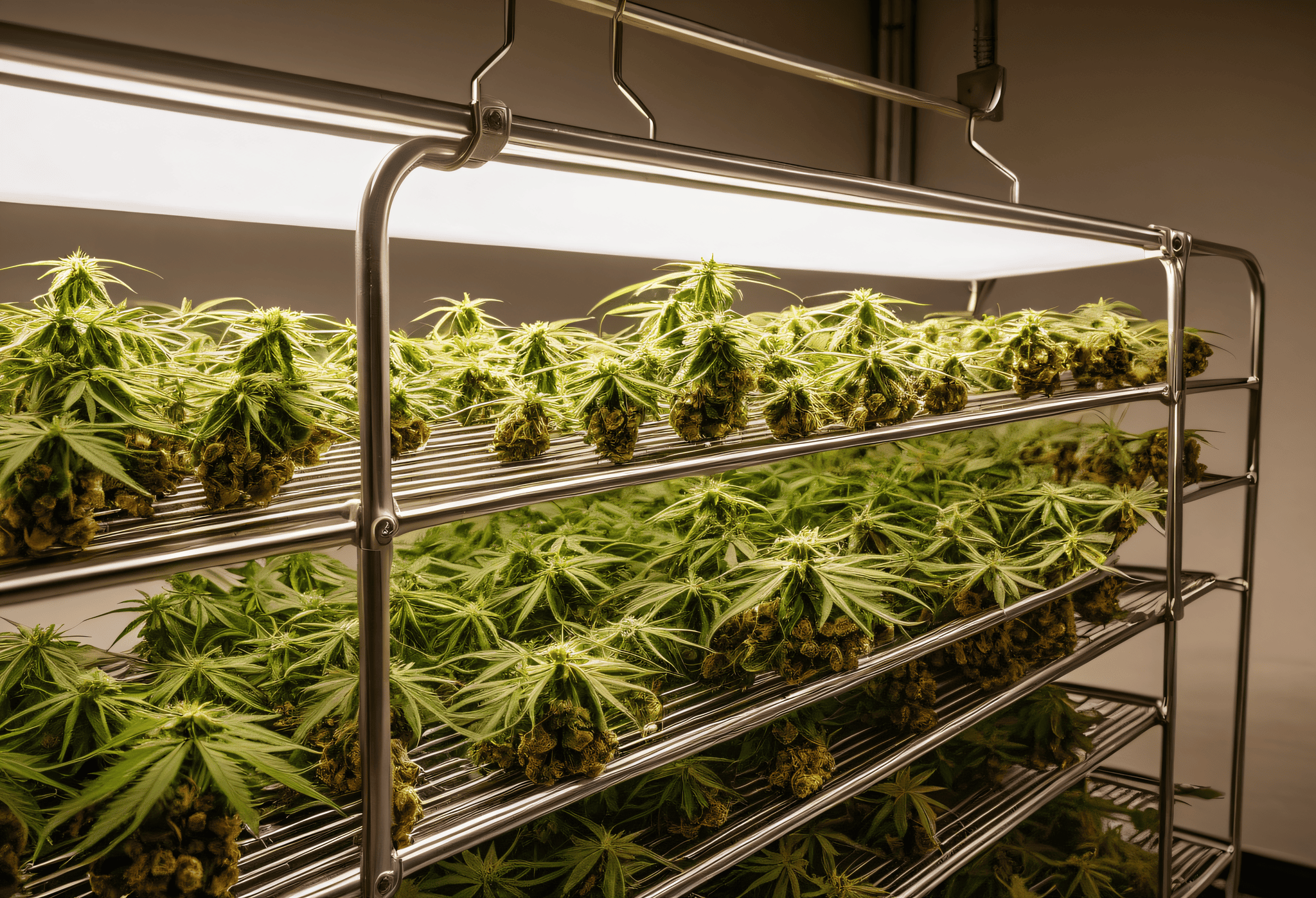
Closing the Gaps in Cannabis Dry-Room Handoffs
Cannabis Industry Journal reports that an incorrect weight, unreadable container label, or missing inventory record may seem minor during a dry-room transfer, but unnoticed errors can cause problems throughout production and further down the supply chain. A clear standard operating procedure can help employees catch and resolve these issues before inventory moves to the next stage. The SOP should require container identifiers, destination, quantities and units, inventory records, current status, and the name of the receiving employee, and it should identify which problems must be corrected before inventory can be accepted and which can be documented for follow-up.
Employees should not have to search through spreadsheets, text messages, and handwritten notes to find information about transferred inventory, so operations should use one primary transfer record. The receiving employee should compare container labels, quantities, and destination information against the transfer record, and record what was checked rather than simply marking a box. Operations should avoid vague descriptions such as “pending” and not rely solely on color-coded statuses, since colors may not appear consistently on printed documents or different screens.
New York Governor Celebrates $4 Billion In Legal Marijuana Sales
Governor Kathy Hochul celebrated New York crossing the $4 billion mark in legal marijuana sales since the launch of the regulated market. “Topping $4 billion in sales shows that promise is a reality,” Hochul said in a press release on Tuesday. The $4.1 billion in adult-use marijuana sales since sales began in late 2022 includes almost $1.5 billion so far in 2026 alone, with third quarter sales reaching $512.6 million and the year-to-date total at $1.41 billion.
“Reaching $4.1 billion in cannabis sales is an extraordinary milestone for New York, but the real story is the people and businesses behind that number,” said John Kagia, executive director of the Office of Cannabis Management. Cannabis Control Board Chair Jessica Garcia said the milestone reflects tremendous progress but also raises the bar for what comes next. Separately, Hochul recently signed legislation clarifying that marijuana microbusinesses can fully participate in cannabis farmers’ markets and pop-up events.
Why CO₂ Management Matters in Commercial Cannabis Cultivation
Cannabis Industry Journal reports that in commercial cannabis cultivation, deciding to enrich with CO₂ is often straightforward, while the key challenge is maintaining the intended concentration consistently without wasting gas, disrupting humidity control, or creating worker-safety risks. Adding more CO₂ does not automatically increase production, and research has shown that photosynthesis responds to CO₂ in combination with light and temperature. A facility running high-intensity lighting may be able to use elevated CO₂ productively, whereas a lower-light strategy would provide little benefit.