
 By
By [ad_1]
The cannabis industry in the United States has experienced remarkable growth over the past decade, evolving from a niche market to a significant economic force. Despite facing a complex regulatory landscape, the sector continues to thrive, driven by state-level legalization, evolving consumer preferences, and increasing investment.
State-Level Legalization and Market Expansion
As of March 2026, cannabis is legal for medical use in 40 states and for recreational use in 24 states. This widespread legalization has spurred market expansion, with new states like Ohio joining the fold. In November 2023, Ohio voters approved the “Regulate Marijuana Like Alcohol” initiative, allowing adults aged 21 and over to purchase, possess, and consume cannabis. This move is expected to generate significant tax revenue and create jobs, further bolstering the state’s economy. (en.wikipedia.org)
Economic Impact and Job Creation
The economic impact of the cannabis industry is substantial. In 2025, the legal marijuana sector is projected to contribute approximately $123.6 billion to the U.S. economy, marking a 9% increase from the previous year. This growth is attributed to expanding markets in states like New York and Ohio, which are offsetting stagnation in mature markets such as California and Colorado. Direct cannabis sales are expected to reach $35.3 billion, with an additional $88.3 billion generated through indirect economic activities. (mjbizdaily.com)
Job creation remains a critical component of this economic expansion. Despite a 3.4% decline in industry employment in 2024, the sector continues to offer numerous opportunities. Emerging markets, particularly in New York and Mississippi, have seen significant employment gains, indicating a shift towards more efficient staffing and the opening of new markets. (jdsupra.com)
Consumer Trends and Product Innovation
Consumer preferences are evolving, with a growing demand for diverse cannabis products. The cannabidiol (CBD) segment, in particular, has seen rapid growth due to its applications in food, pharmaceuticals, and cosmetics. Over 60% of consumers now prefer cannabis in edible or oil form over traditional smoking methods, reflecting a shift towards more health-conscious consumption. (marketbusinessinsights.com)
The industry has also attracted high-profile endorsements, with celebrities like Jay-Z and Snoop Dogg launching branded cannabis products. These partnerships have played a significant role in mainstreaming cannabis culture and expanding its appeal to a broader audience. (globenewswire.com)
Regulatory Challenges and Federal Landscape
Despite state-level progress, the cannabis industry faces significant regulatory challenges. At the federal level, cannabis remains classified as a Schedule I substance under the Controlled Substances Act, creating a complex legal environment. This federal prohibition complicates banking, taxation, and interstate commerce for cannabis businesses. In April 2024, the Department of Justice initiated a process to reschedule cannabis to the less-restrictive Schedule III, with an executive order in December 2025 expediting this process. (en.wikipedia.org)
Legal challenges, such as the Canna Provisions v. Garland case, have sought to address the constitutionality of cannabis scheduling. However, in July 2024, the U.S. District Court dismissed the case, and the Supreme Court declined to hear an appeal, leaving the federal status of cannabis unchanged. (en.wikipedia.org)
Market Saturation and Financial Pressures
Mature markets like California and Colorado are experiencing market saturation, leading to price compression and declining sales. In California, sales are projected to decline by 9% in 2023, totaling $4.8 million. This trend underscores the need for businesses to innovate and adapt to maintain profitability. (bdsa.com)
Financial pressures are also evident, with delinquent payments totaling $3.8 billion in the industry, attributed to high borrowing costs and the need to maintain cash reserves. This financial strain highlights the challenges cannabis businesses face in managing cash flow and securing investment. (imacorp.com)
Conclusion
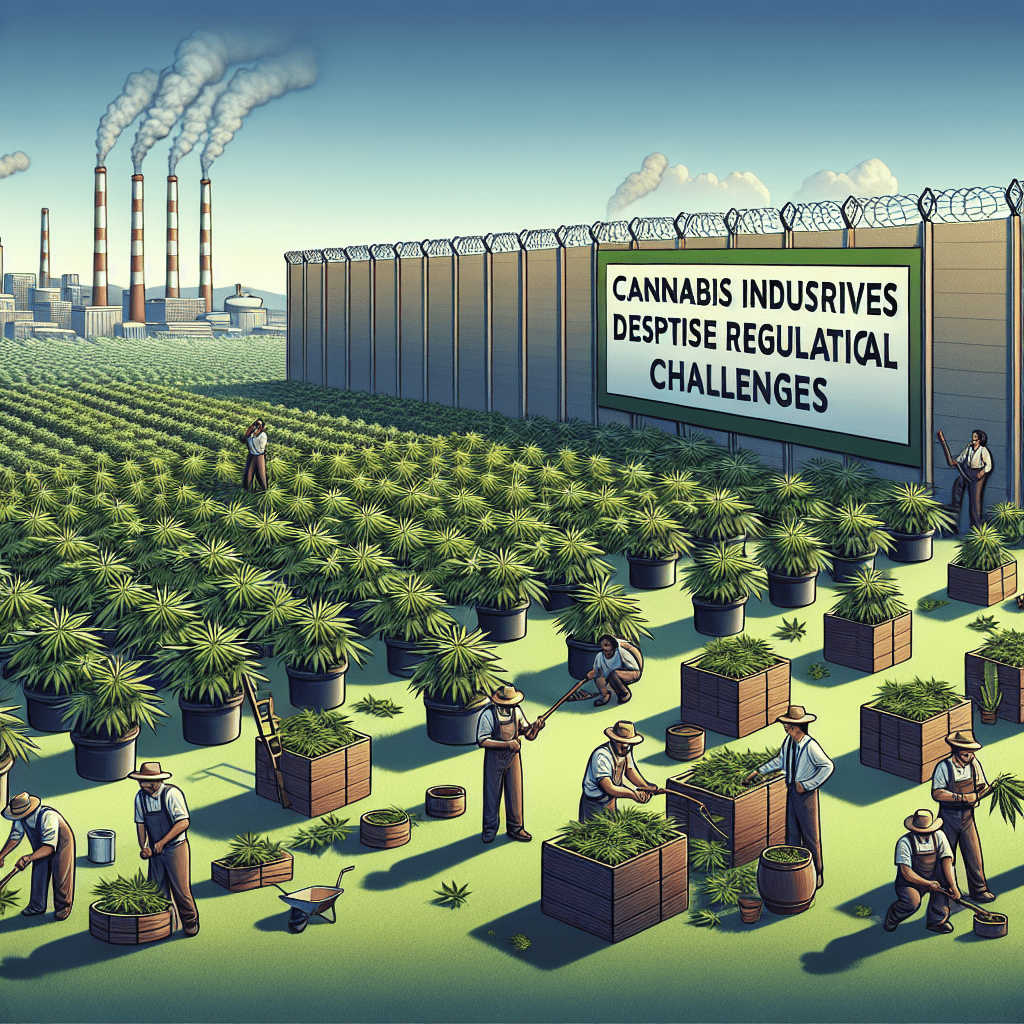
The U.S. cannabis industry continues to thrive despite regulatory challenges, driven by state-level legalization, economic contributions, evolving consumer preferences, and ongoing investment. While federal prohibition and market saturation present obstacles, the industry’s resilience and adaptability suggest a promising future. As the legal landscape evolves, the cannabis sector is poised to play an increasingly significant role in the U.S. economy and society.
[ad_2]