 By
By [ad_1]
The landscape of cannabis activism in the United States has undergone a remarkable transformation over the past few decades. What began as grassroots movements advocating for decriminalization has evolved into sophisticated campaigns influencing state and federal policies. As of September 2025, the interplay between activism and policy continues to shape the nation’s approach to cannabis regulation.
The Evolution of Cannabis Activism
In the early 1970s, events like Michigan’s Hash Bash, first held in 1972, symbolized the burgeoning demand for cannabis reform. This annual gathering in Ann Arbor has grown into a significant platform for advocacy, drawing thousands each year to champion legalization efforts. (en.wikipedia.org)
Similarly, organizations such as the Buffalo Cannabis Movement (BCM), established in 2014, have been instrumental in shifting public opinion. Operating across New York, Pennsylvania, and other states, BCM aligns with national groups like the National Organization for the Reform of Marijuana Laws (NORML) to promote the responsible use of cannabis by adults. (en.wikipedia.org)
Recent Policy Shifts and Legal Challenges
Activists’ persistent efforts have led to significant policy changes. In 2024, Florida’s Amendment 3 sought to legalize recreational cannabis. Despite garnering 56% support, it fell short of the 60% threshold required for adoption. This outcome underscores the challenges activists face, even in states with substantial public backing. (en.wikipedia.org)
At the federal level, the Justice Department’s 2024 proposal to reclassify marijuana from a Schedule I to a Schedule III substance marked a historic shift. This reclassification acknowledges marijuana’s medical uses and lower abuse potential compared to substances like heroin. While not legalizing recreational use, it signifies a major change in U.S. drug policy. (apnews.com)
However, legal challenges persist. In May 2025, the 1st U.S. Circuit Court of Appeals in Boston rejected a challenge by Massachusetts cannabis businesses contesting the federal ban on marijuana. The court upheld the Supreme Court’s 2005 decision in Gonzales v. Raich, affirming Congress’s authority to criminalize marijuana possession under the Commerce Clause, even in states allowing medical use. (reuters.com)
State-Level Developments and Activist Responses
In California, the 2025 Cannabis Policy introduced significant changes, including the legalization of "Amsterdam-style" cannabis cafés. Assembly Bill 1775 allows licensed dispensaries to prepare and serve non-psychoactive food and beverages and host live entertainment, aiming to stimulate legal cannabis sales and offer consumers more social avenues for consumption. (en.wikipedia.org)
Conversely, Georgia lawmakers are considering banning beverages containing delta-THC, even as they expand the state’s medical marijuana program. This move reflects the ongoing tension between regulation and access, with activists advocating for balanced policies that ensure safety without stifling the industry. (axios.com)
In Oregon, the passage of Ballot Measure 119 in 2024 aimed to facilitate unionization within the cannabis industry. However, a federal judge struck down the measure in May 2025, citing violations of free speech and federal labor laws. This decision highlights the complex legal landscape activists navigate in their pursuit of equitable labor practices. (en.wikipedia.org)
The Role of Political Parties and Advocacy Groups
The Legal Marijuana Now Party (LMN), established in 1998, exemplifies the political dimension of cannabis activism. Advocating for the abolition of the Drug Enforcement Administration and the legalization of hemp and marijuana, LMN has gained formal recognition in states like Minnesota and ballot access in Nebraska. Their efforts illustrate the integration of cannabis reform into broader political platforms. (en.wikipedia.org)
Despite progress, anti-legalization groups are intensifying efforts to halt the momentum of cannabis reform. Organizations like Smart Approaches to Marijuana (SAM) employ legal, political, and social strategies to influence public perception and policy, indicating that the debate over cannabis legalization remains contentious. (reuters.com)
Looking Ahead: The Future of Cannabis Activism
As of September 2025, the trajectory of cannabis activism in the United States reflects a dynamic interplay between advocacy, policy, and public opinion. While significant strides have been made, challenges persist, particularly in aligning state and federal regulations and addressing legal obstacles.
The potential reclassification of cannabis at the federal level, as considered by the Trump administration, could mark a pivotal moment in drug policy. Such a shift would not only acknowledge the medical benefits of cannabis but also alleviate some of the legal and financial burdens faced by the industry. (time.com)
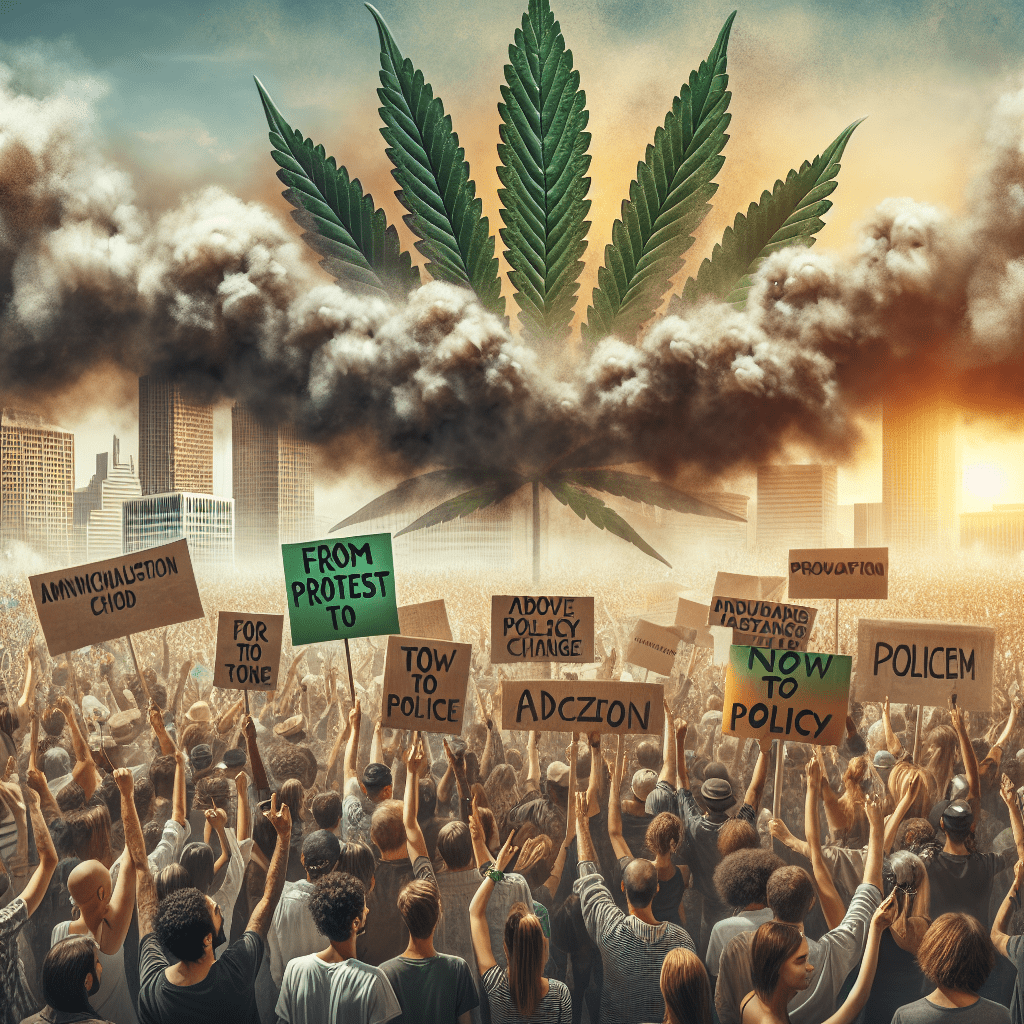
In conclusion, the journey from protest to policy in the realm of cannabis activism underscores the power of sustained advocacy. As activists continue to navigate legal complexities and societal attitudes, their efforts remain crucial in shaping a more equitable and informed approach to cannabis regulation in the United States.
Recent Developments in U.S. Cannabis Policy:
- Justice Department formally moves to reclassify marijuana as a less dangerous drug in historic shift
- US appeals court rejects challenge to federal marijuana ban
- Is the Trump Administration Considering Softening Laws on Cannabis?
[ad_2]